Keep a ready home. One small habit at a time.
Plain, calm advice on water, the larder, first aid and the rest, from a countryman who has always kept a bit put by. No fuss, no fear, no fancy kit.
Everything, kept in its proper place
Water
How much to keep, what to keep it in, and when to swap it.
1 articleOpen →Shelf No. 2Food Storage
A store cupboard of things you already eat, bought a tin ahead.
3 articlesOpen →Shelf No. 3Recipes
Ration Book Kitchen: making a little go a long way.
2 articlesOpen →Shelf No. 4Medical
A sensible first aid box and a medicine cupboard that never runs low.
New articlesOpen →Shelf No. 5Sanitation
The toilet, washing and the bins, when the water goes off.
New articlesOpen →Shelf No. 6Steady Mind
Routine, company and something for your hands.
New articlesOpen →Shelf No. 7Natural Remedies
Herbs by the back door, and what they were used for.
New articlesOpen →Shelf No. 8Garden
A windowsill, a sack of potatoes and a few beans up a cane.
New articlesOpen →Shelf No. 9The Kit
Torch, radio, power bank, cash in a tin. The dull things that matter.
5 articlesOpen →Shelf No. 10The 90-Day Plan
If the shops close or the power stays off for a long spell, structure is what holds a house together. What to do, day by day, for ninety days.
90 days · 5 stages · a daily routineOpen the plan →Three jobs for this month
- 1
Read the checklist
The government's Be Ready list, gone through item by item. Ten minutes with a cup of tea.
- 2
Put water by
Three litres a head a day, for three days. The most important line on the list.
- 3
Three days of tins
Food that needs no fridge and no cooking, that you'd eat anyway.
When it goes on longer, a house needs a timetable
Most trouble is over in a day or three. For the rarer, longer spell, here is what to do and when, so nobody wakes up wondering.
Latest articles
The Be Ready Checklist, Explained Item by Item
The Be Ready checklist explained item by item: how much water and food to keep, which radio and torch to choose, and how to build a three-day kit slowly.
No. 1 · WaterHow Much Water Should You Store for an Emergency?
How much water to store for an emergency: the 3 litres per person per day rule, quick sums for your household, the best containers and when to swap them.
No. 2 · Food StorageWhat Tinned Food to Stockpile, and How Long It Really Lasts
What tinned food to stockpile for a three-day emergency, how long tins really last, best before vs use by explained, and which dented tins to throw away.
No. 3 · RecipesHow to Cook When the Power Is Out, Safely
How to eat well in a power cut without risking carbon monoxide: no-cook meals, flasks, haybox cooking, gas hob tips and keeping the fridge and freezer cold.
No. 3 · RecipesThe Ration Book Kitchen: A 1940s Store Cupboard for Today
A wartime-inspired store cupboard essentials list for today: the staples to keep, how to store and rotate them, and a simple lentil soup from the cupboard.
No. 9 · The KitGrab Bag vs Home Emergency Kit: What's the Difference?
The difference between a grab bag and a home emergency kit, with a printable grab bag list: documents, medicines, cash, torch, power bank and what to leave out.
Printed for the kitchen drawer

Bean Suppers
Twenty suppers from the beans you've put by, printed for the kitchen drawer. Six of them need no heat at all.
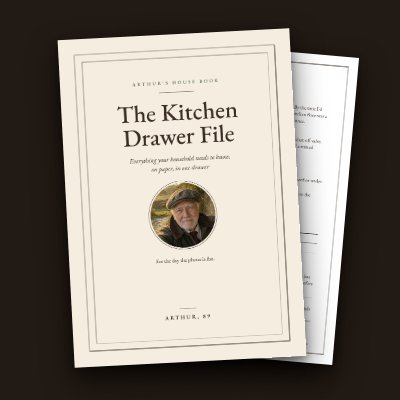
The Kitchen Drawer File
Everything your household needs to know, on paper, in one drawer. Where the water turns off, who to ring, and what to do in the first hour when the lights go.
Coming next: the Old Ways Household Book, with every shelf, the full 90-day plan and every checklist in one place.

“I've kept a tin of matches by the back door since 1961. Nobody ever thanked me for it, and nobody ever went without a light.”Arthur, 89 · About Arthur
The Larder Checklist
The three-day kit, the store cupboard and the six-monthly check, on one sheet for the back of the larder door. Plus one short letter a week from Arthur.
No spam, and you can leave any time.